
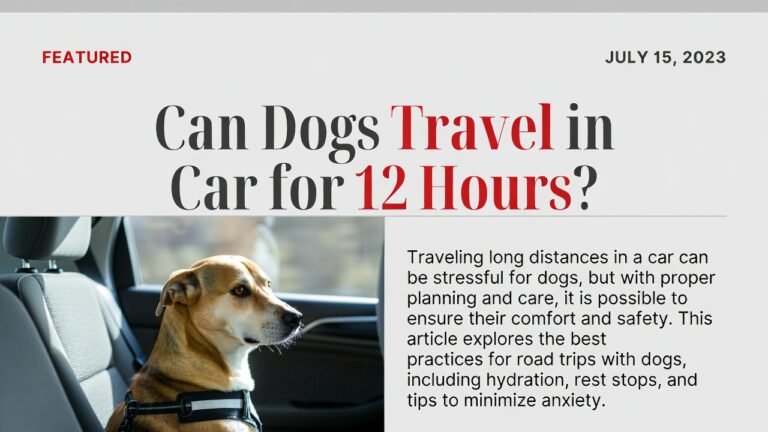
Many dog owners wonder if their pets can travel in a car for 12 hours. Long car trips can be hard for dogs. It needs careful planning and care. This article will explain what to do to keep your dog safe and happy on long drives.
Is It Safe for Dogs to Ride in a Car for 12 Hours?
The answer depends on many things. Some dogs can handle long trips well. Others may find it very stressful. Age, health, breed, and comfort all matter. Puppies, old dogs, or sick dogs may have a harder time.
Dogs do not sweat like humans. They cool down by panting. In a hot car, they can get very sick fast. Heatstroke is a real danger. Even if you leave the windows open, the car can get too hot.
So, 12 hours in a car can be too long if you do not take breaks and care.
What Are the Risks of Long Car Rides for Dogs?
- Heatstroke: Dogs can overheat quickly in cars.
- Dehydration: Long time without water is dangerous.
- Stress and Anxiety: Some dogs fear car rides.
- Motion Sickness: Some dogs get sick in cars.
- Physical Discomfort: Sitting too long can hurt joints.
Because of these risks, you must prepare well for a long trip.
How to Prepare Your Dog for a 12-Hour Car Trip
Preparation can make a big difference. Here are some tips:
- Visit the Vet: Check your dog’s health first.
- Practice Short Trips: Start with short drives to build comfort.
- Pack Essentials: Bring water, food, toys, and bedding.
- Use a Safe Carrier or Seat Belt: Keep your dog secure in the car.
- Plan Breaks: Stop every 2-3 hours for bathroom and exercise.
- Keep the Car Cool: Use air conditioning or open windows safely.
How Often Should You Stop on a Long Trip?
It is important to stop often. Dogs need to stretch and relieve themselves.
| Time in Car | Recommended Break |
|---|---|
| Every 2-3 hours | Stop for 15-20 minutes |
| After 6 hours | Give a longer walk and water |
| At 12 hours | Rest overnight if possible |
How to Keep Your Dog Comfortable During the Trip
Comfort helps your dog enjoy the trip. Here are some ideas:
- Bring Familiar Items: A favorite blanket or toy helps reduce stress.
- Keep Water Available: Offer small amounts often to avoid dehydration.
- Feed Lightly: Avoid heavy meals before and during the trip.
- Use a Harness or Crate: It keeps your dog safe and calm.
- Talk Calmly: Your voice can soothe your dog.
- Play Soft Music: Some dogs relax with gentle sounds.
Special Considerations for Different Dogs
Not all dogs are the same. Some need more care on long trips.
Puppies
Puppies have small bladders. They need frequent stops. Avoid long trips without breaks.
Senior Dogs
Older dogs may have joint pain or health issues. They may tire faster. Make the trip slow and gentle.
Brachycephalic Breeds
Dogs like Bulldogs or Pugs have short noses. They can have trouble breathing. Never leave them alone in a hot car.
Dogs With Health Issues
If your dog is sick, ask your vet before travel. Some dogs need medicine or special care.
What to Do If Your Dog Shows Signs of Stress or Illness
Watch your dog closely. Signs of stress or illness include:
- Heavy panting or drooling
- Restlessness or whining
- Vomiting or diarrhea
- Unusual tiredness or weakness
- Shaking or trembling
If you see these signs, stop the car immediately. Give water and a break. If symptoms continue, seek help from a vet.