
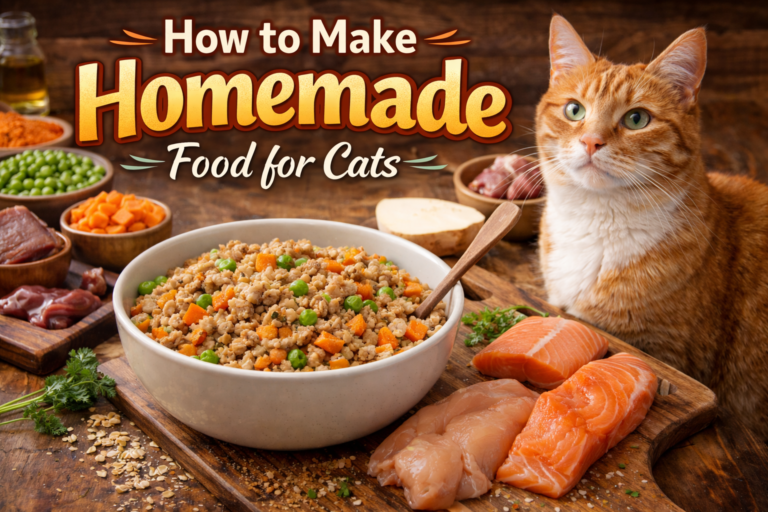
Many cat owners want to feed their cats homemade food. This idea is nice because you control the ingredients. But making food for cats is not simple. Cats need special nutrients to stay healthy. So, you must learn how to make food that is safe and good for them.
Why Make Homemade Food for Cats?
Some people want to make cat food at home because they want to avoid bad ingredients. Many commercial cat foods have fillers or ingredients you do not want your cat to eat. Homemade food lets you choose fresh meat and vegetables. You also can avoid preservatives and chemicals.
Another reason is health problems. Some cats have allergies or stomach problems. Homemade food can help because you can avoid foods that cause problems. Also, some cats do not like the taste of store food. Homemade food can be tastier for them.
What Do Cats Need in Their Food?
Cats are meat-eaters. They need protein from animals. Their food must have specific nutrients that only meat has. These nutrients include taurine, arachidonic acid, and vitamin A. If cats do not get these, they can get sick.
Besides meat, cats need fats and some vitamins and minerals. They do not need many carbohydrates like dogs or people. So, do not feed your cat bread or pasta as main food.
Important Nutrients for Cats
| Nutrient | Why It Is Important | Sources |
|---|---|---|
| Taurine | Helps heart and eyes stay healthy | Meat, especially heart and liver |
| Protein | Builds muscles and energy | Chicken, turkey, beef, fish |
| Fat | Gives energy and helps skin | Animal fat, fish oil |
| Vitamin A | Good for vision and skin | Liver and fish oils |
| Calcium | Strong bones and teeth | Ground eggshell, bone meal |
Basic Ingredients for Homemade Cat Food
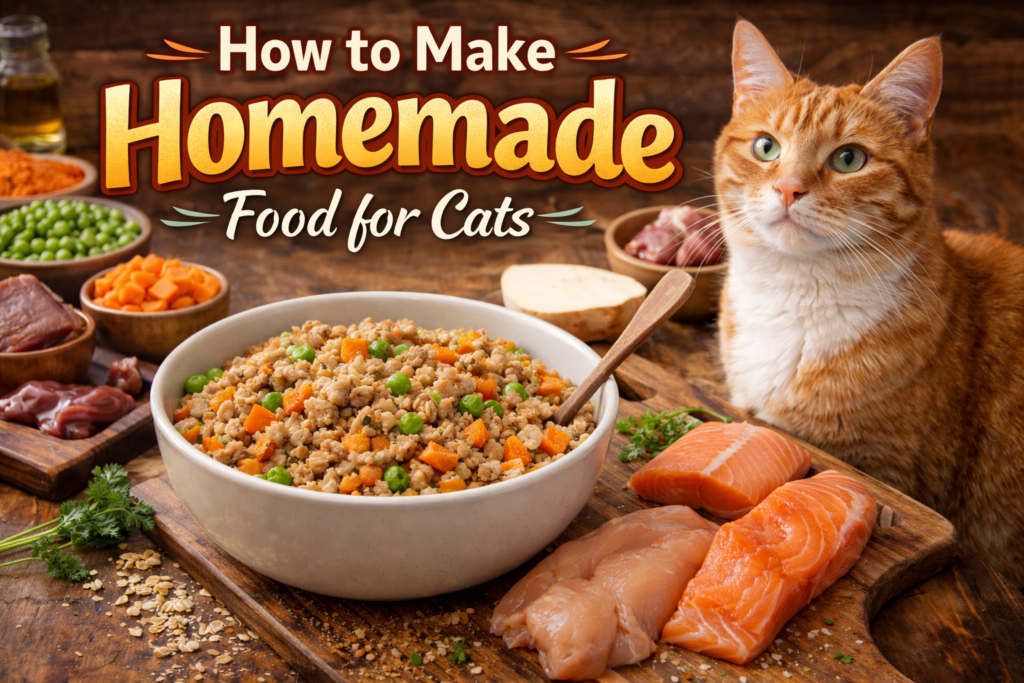
Use fresh meats like chicken, turkey, or beef. You can also use fish like sardines or salmon sometimes. Include organ meats like liver or heart. These have important vitamins and taurine.
Add small amounts of cooked vegetables like peas or squash. Cats do not need many vegetables, but a little can help with digestion. Avoid onions, garlic, and other toxic foods.
Add a source of calcium. You can use ground eggshell or a small amount of bone meal powder. Calcium is important to keep your cat’s bones strong.
How to Prepare Homemade Cat Food
- Choose fresh meat and wash it well.
- Cook the meat lightly by boiling or baking. Do not add salt or spices.
- Cook vegetables until soft. Avoid raw vegetables.
- Grind or chop meat and vegetables into small pieces.
- Add calcium source like ground eggshell.
- Mix well and store in the fridge or freezer.
Sample Recipe: Chicken and Sardine Cat Food
This recipe is simple and nutritious.
- 1 cup cooked chicken breast, chopped
- 2 sardines in water, mashed
- 2 tablespoons cooked peas
- 1 egg yolk
- 1 teaspoon ground eggshell (for calcium)
Mix all ingredients well. Serve a small portion to your cat. Store the rest in the fridge for up to 3 days.
Important Tips for Feeding Homemade Food
- Always consult a vet before changing your cat’s diet.
- Do not feed homemade food only every day without vet advice.
- Make sure to include taurine in the food. It is essential.
- Feed small portions at first to see if your cat likes it.
- Do not add salt, onion, garlic, or spices.
- Keep food fresh and store properly.
Challenges of Making Homemade Cat Food
Making homemade cat food takes time and effort. You must learn which nutrients cats need. Without them, cats can get sick. It can be hard to find supplements like taurine.
Also, homemade food can cost more than dry food. Meat and supplements add up. You must make the food carefully to avoid mistakes.
Some owners find it easier to use commercial cat food. These foods have everything cats need. But if you want homemade food, be careful and plan well.